
The Science Revision Skills Students Often Develop Too Late
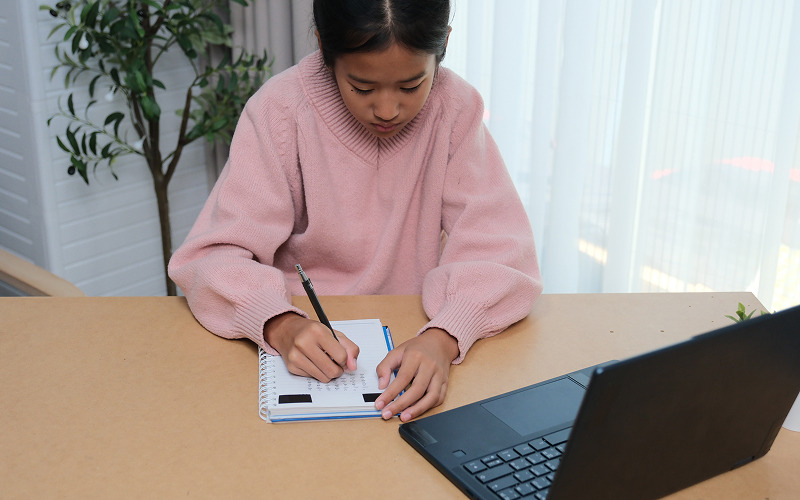
Many students spend most of their Science revision rereading notes and memorising definitions only to find in the final months that exam questions demand much more. By the time they realise that marks depend on how knowledge is applied and explained, there is little time left to build the skills that matter. This pattern shows up often among students who seek secondary Science tuition in Singapore shortly before their major exams. Recognising which revision skills tend to develop late helps students and parents plan earlier and avoid a last-minute scramble.
Reading Command Words Carefully
Science questions use specific verbs that signal what kind of answer is expected, yet many students treat them as interchangeable. Misreading them leads to answers that are correct in content but miss the marks, as seen in these common slips:
- Writing a description when the question asks students to “explain”, which requires a reason or mechanism.
- Giving a single point for “compare” questions instead of stating how both items differ or are similar.
- Overlooking “suggest”, which asks students to apply knowledge to a situation not covered directly in the syllabus.
- Leaving out units or working when a question asks students to “calculate”.
Applying Concepts to Unfamiliar Contexts
Exam papers increasingly present familiar ideas in new settings, such as an unfamiliar experiment or real-world scenario. Students who only memorise textbook examples often struggle here, particularly with the following skills:
- Identifying which concept a question is testing when it is framed around an unfamiliar situation.
- Linking ideas across topics, such as connecting energy changes in Physics to reactions in Chemistry.
- Transferring a known pattern, like the effect of temperature on enzymes, to a new organism or process.
- Explaining why a result occurs rather than simply stating what happens.
Handling Data and Practical-Based Questions
Questions on graphs, tables and experimental design carry a significant share of marks but are rarely practised enough during revision. Weaknesses in this area usually include these gaps:
- Describing trends in graphs without quoting specific values as evidence.
- Confusing independent, dependent and controlled variables when evaluating an experiment.
- Suggesting vague improvements, such as “be more careful”, instead of specific changes to the method.
- Plotting graphs with unsuitable scales, missing labels or poorly drawn best-fit lines.
- Drawing conclusions that go beyond what the data actually shows.
Writing Structured, Mark-Focused Answers
Knowing the content is not the same as presenting it in a way that earns marks. Many students only learn how marking schemes reward answers after receiving disappointing results, and they commonly need to build these habits:
- Matching the number of points written to the marks allocated for each question.
- Using precise scientific terms, such as “diffusion” or “displacement”, instead of everyday language.
- Organising longer answers in a logical sequence from cause to effect.
- Avoiding contradictions, where a correct point is cancelled out by an incorrect one in the same answer.
Reviewing Mistakes Systematically
Doing practice papers helps only when students study what went wrong afterwards. A habit of reflection often develops late, even though it brings some of the clearest improvements over time. Effective reviewing typically includes the following steps:
- Keeping an error log that records each mistake, its cause and the correct approach.
- Sorting errors into categories, such as content gaps, misread questions or careless slips.
- Revisiting weak topics on a schedule rather than only before tests.
- Comparing answers against marking schemes to see exactly which phrases earned credit.
Starting These Skills Earlier
Strong Science results depend as much on exam technique as on content knowledge, and these skills take months of practice to develop. Introducing command-word drills, data questions and error logs from Secondary Three gives students time to refine their approach before the final year. Students who find it difficult to build these habits on their own may benefit from combined Science O-level tuition that focuses on application, answering techniques and regular feedback alongside content review.
Visit Genius Mind Home Tuition to explore our secondary Science classes and find a timetable that suits your child.


